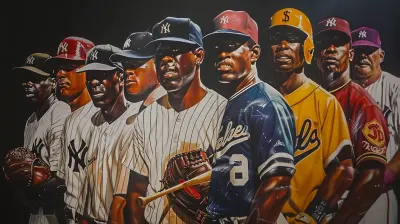
How All-Star Voting Reflects the Changing Face of Sports
14 February 2026
Let’s be real—sports aren’t what they used to be. And that’s not a bad thing. From the rise of social media to the explosion of global fandoms, the way we engage with sports is evolving every single day. At the heart of this evolution is something that often seems more like a popularity contest than an actual performance-based honor: All-Star voting.
But here’s the twist—All-Star voting isn't just a flashy fan event. It’s a mirror. A mirror that reflects how much sports have changed, who gets a seat at the table, and what truly matters to today’s fans.
In this article, we’re diving deep into how All-Star voting pulls back the curtain on the shifting identity of sports. So grab your jersey, and let’s get into it.
The Original Purpose of All-Star Voting
Before we start breaking down its impact, it’s important to understand why All-Star voting existed in the first place. Back in the day—think early to mid-20th century—All-Star games were straightforward: a stage to showcase the best of the best.The idea was simple. Take the top-performing athletes from each league, give the fans a dream matchup, and celebrate excellence in sports. It was like an Oscars night for athletes.
But fast forward to today? The game has changed—and so have the rules of engagement.
From Skill to Popularity: The Shift in Criteria
Let’s not sugarcoat it: All-Star voting has become more about who fans like rather than who’s statistically the best.Ever seen a player make the All-Star team while having a so-so season? Or better yet—seen someone snubbed entirely despite MVP-caliber numbers?
That’s because All-Star voting has slowly morphed into a popularity contest. And in this era of TikTok highlights and memeable moments, popularity trumps performance more often than not.
Example Time
- NBA All-Star 2023: Andrew Wiggins was voted in as a starter. While he’s definitely solid, many argued that his numbers didn’t merit a starting spot. So how did he get there? A viral push from K-pop fans thanks to his connection with a certain music group.That’s the power of fandom in 2024. It’s not just about stats. It’s about reach.
Social Media: The Ultimate Game-Changer
Twenty years ago, if you wanted to vote for an All-Star, you had to punch a paper ballot at a stadium or call a hotline. Today? A single tweet can swing the vote.Social media has flipped the script. Now, athletes are brands. Their highlights, personalities, and even outfits can go viral faster than you can say “retweet.”
Why Does This Matter?
Because influence equals votes. Players who know how to work their online presence can build massive support—even from fans who may never watch a full game.And let’s face it: charisma is now just as important as a jump shot.
Globalization of Sports Fandom
Here’s something wild to think about: the person voting for your favorite team’s All-Star starter might live halfway across the globe.Thanks to streaming services, social platforms, and international outreach, sports fans come from all corners of the world. This globalization has turned leagues like the NBA, NFL, and MLB into international products.
Take the NBA for Example
- Luka Dončić (Slovenia)- Giannis Antetokounmpo (Greece)
- Joel Embiid (Cameroon/France/USA)
These guys not only dominate on the court—they bring entire countries to the voting booths (or screens). That’s a massive shift from the USA-centric sports culture of decades past.
This global reach means that All-Star votes are now influenced by cultural pride, international television rights, and cross-border fandoms. It’s no longer just about who’s playing the best in the league—it’s about who’s representing millions abroad.
Representation Matters, and Fans Know It
Let’s talk real for a second. For a long time, All-Star games didn’t reflect the diversity of the fanbase—or even the leagues themselves.Now? Fans are more vocal than ever about representation. Whether it’s seeing more women involved in All-Star festivities, or players from underrepresented communities getting their shine, fans want to see people who look like them on the big stage.
All-Star voting captures that desire in real-time. It rewards players who connect with their communities—on and off the field.
And this goes beyond race or nationality. It includes:
- LGBTQ+ representation
- Social justice involvement
- Mental health advocacy
Players who take a stand or represent something deeper gather devoted followings, which directly influence voting outcomes.
The Rise of the Cult Hero
Every league now has a few players you’d never expect in an All-Star game, yet somehow they’re in the conversation.These aren’t superstars in the traditional sense—but they’ve captured the hearts of fans. Maybe it’s through hustle plays, locker-room charisma, or just being a walking highlight reel.
Think: Alex Caruso, Jeremy Lin, or John Scott
These players represent a new kind of All-Star: the cult hero. They remind us that All-Star voting isn’t JUST about crowning the best—it’s about storytelling.And fans? They love a good underdog story.
The Business Side of Things
Don’t ignore the economics here. Leagues need All-Star games to be profitable. And guess what drives profits these days?Engagement.
The more people care about who’s on the roster, the more they tune in. All-Star voting has slowly been shaped to maximize hype and interaction. Think hashtags, social media challenges, and influencer campaigns.
By letting fans drive the vote, leagues actually tap into free marketing power. Every tweet, every podcast debate, every YouTube reaction video—it all builds buzz.
So yes, letting fans vote is fun. But it’s also brilliant business.
The Double-Edged Sword of Fan Power
Alright, let’s be fair. While fan engagement is awesome, it’s not always perfect.All-Star voting sometimes leads to questionable picks. Snubs happen. Deserving players get overlooked because they’re not flashy or famous. It sparks debates—sometimes heated ones.
Purists argue that it undermines the “merit” of the All-Star title. And they’re not totally wrong.
That’s the tightrope leagues walk: balancing entertainment with integrity.
But isn’t that sports in a nutshell? The tension between spectacle and substance is what makes the whole thing so compelling.
What This Tells Us About the Future of Sports
If there’s one big takeaway here, it’s this: All-Star voting is less about who’s best right now and more about who matters.It’s about who’s connecting. Who’s resonating. Who stands for something fans care about.
And isn’t that kind of beautiful?
The fans’ voice has never mattered more. In a way, All-Star voting is democracy in sneakers—it reflects what we value, who we celebrate, and how we want sports to feel.
As fans, we’re not just shouting from the stands anymore. We have a vote. A say. A controller in our hands, steering the direction of the game.
Final Thoughts
All-Star voting is like a snapshot of modern sports culture. It tells us that:- User engagement is king.
- Social media presence can outweigh stats.
- Global fans are here to stay.
- Representation is at the forefront.
- And storytelling is still as powerful as ever.
So the next time you see a surprising name on an All-Star ballot, think twice before rolling your eyes. That player might just be the face of a shifting culture—one where fans don’t just watch the game… they help shape it.
all images in this post were generated using AI tools
Category:
All Star GamesAuthor:

Uziel Franco
Discussion
rate this article
2 comments
Daniel Hunter
All-Star voting transcends mere popularity; it mirrors societal shifts and inclusivity in sports. As diverse voices gain recognition, we celebrate the evolution of athletics, where every athlete's story adds depth to the game, enriching the experience for all fans.
March 18, 2026 at 4:44 AM
Uziel Franco
Thank you for capturing the essence of All-Star voting so eloquently! It truly highlights how inclusivity and diverse narratives are reshaping the sports landscape, enriching the experience for fans and athletes alike.
Peregrine Chavez
Embrace change, celebrate diverse talents together!
February 14, 2026 at 4:57 AM
Uziel Franco
Absolutely! Embracing change and celebrating diverse talents enriches the sports community and reflects the evolution of our culture.