How to Perfect Your Running Stride for Speed and Efficiency
26 March 2026
Let’s be brutally honest — if your running stride is sloppy, unbalanced, or inefficient, you’re wasting time, energy, and let’s face it, potential. You could be putting in the miles, sweating buckets, grinding through your workouts, and STILL not hitting your pace goals, just because your form is holding you back. That’s a hard pill to swallow, right?
But here’s the good news: fixing your running stride isn’t rocket science. You don’t need elite genetics or a bionic knee. What you need is awareness, intention, and a willingness to dial things in. So if you’re ready to stop running like a wounded giraffe and start flowing like a damn gazelle, buckle up. You're about to revolutionize the way your feet hit the ground.
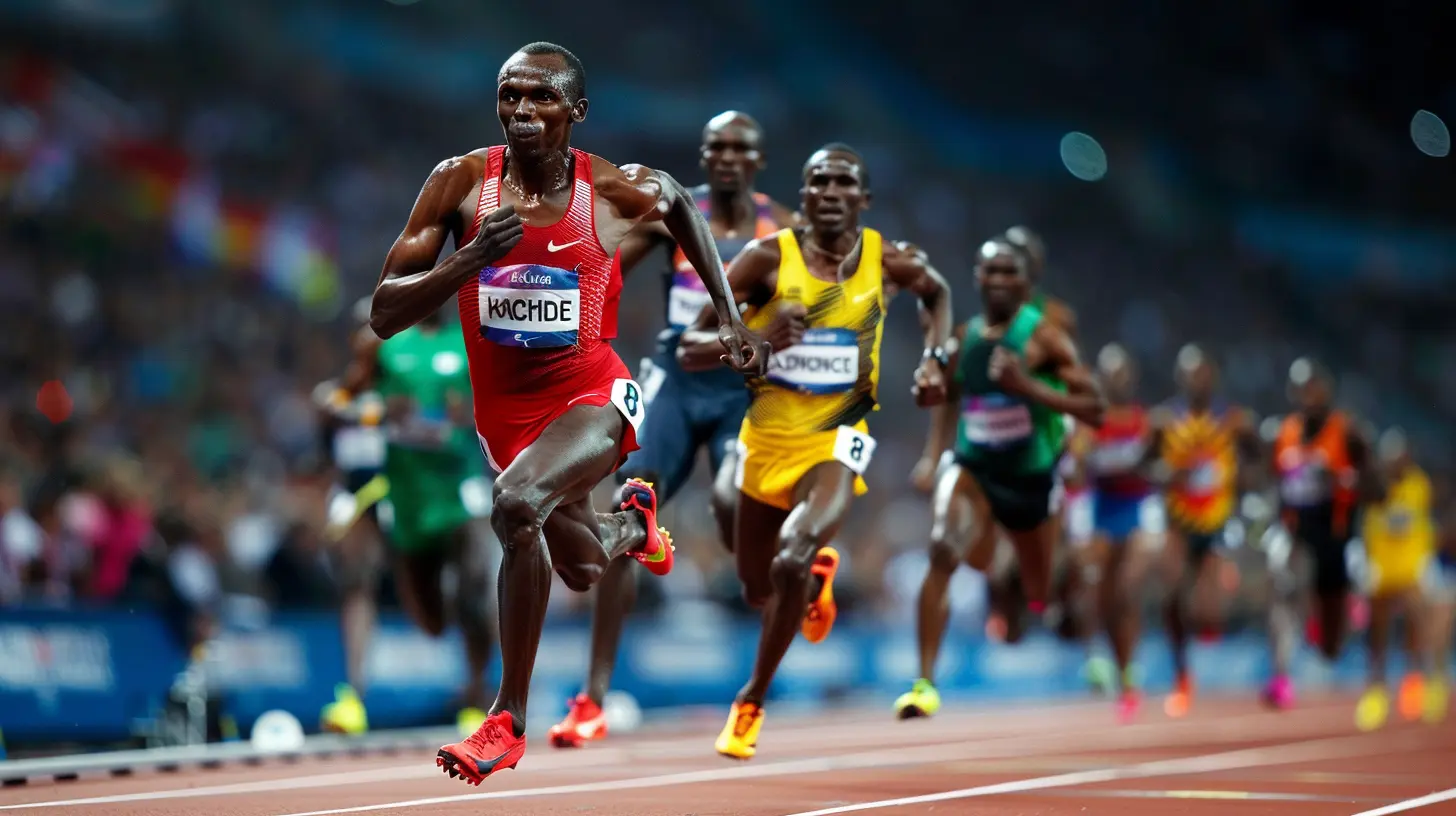
Why Stride Even Matters
Before we start dissecting your stride, let's get something straight — your running stride is everything. It’s your engine. Your transmission. Your gas mileage. A bad stride is like driving a sports car with the handbrake on. You’re burning energy and going nowhere fast. A solid, efficient stride? That’s where speed and long-term performance live.Whether you're chasing a sub-3-hour marathon or simply trying to shave seconds off your 5K time, your stride is the foundation. So yeah — it matters. A lot.
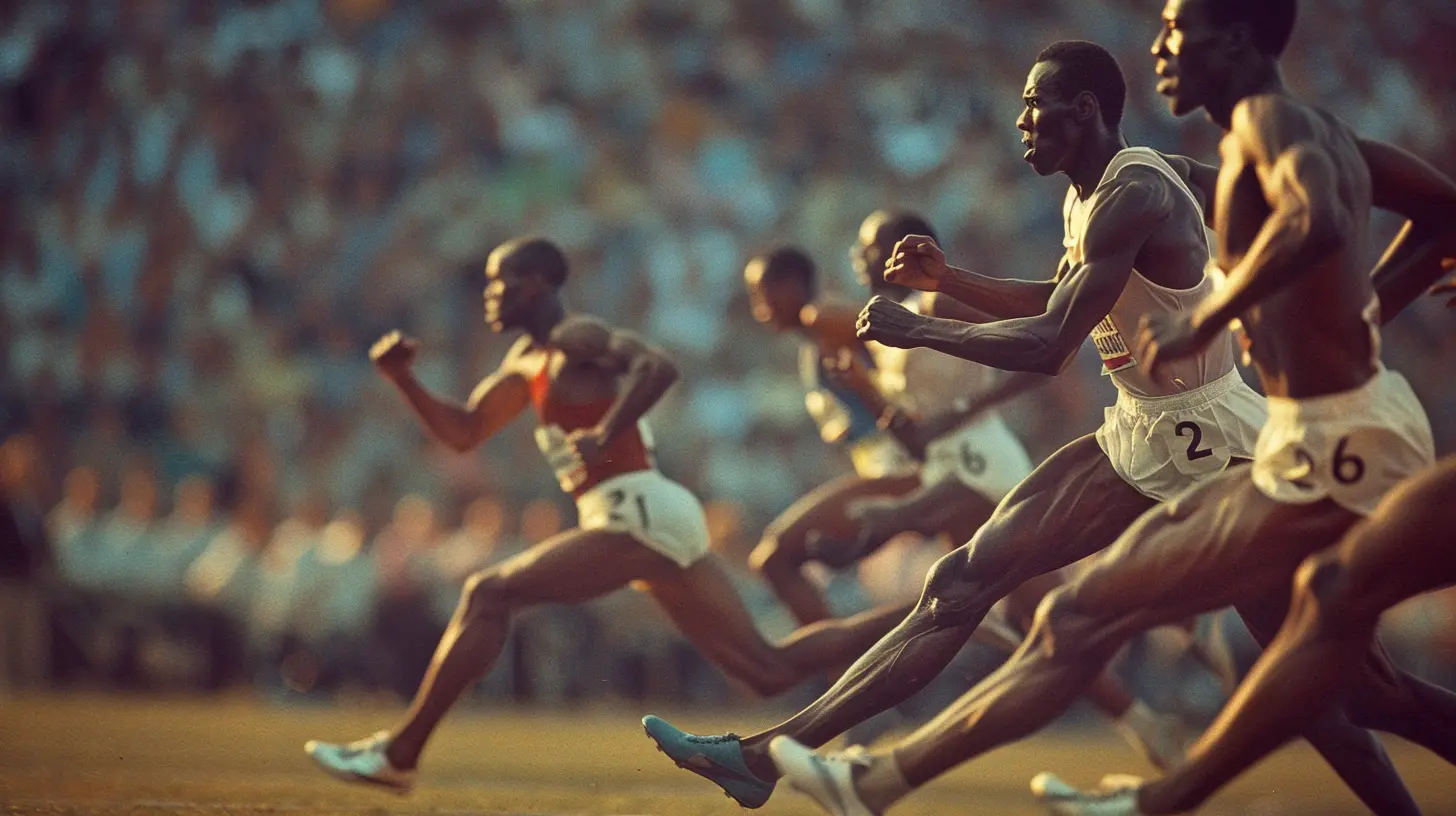
The Anatomy of a Perfect Running Stride
Let’s break it down. The perfect stride has a few key components that all play nicely together. Think of it like a smooth, well-oiled machine. No jerky motions. No wasted effort. Just clean, efficient movement.1. Posture Is Your Launch Pad
First thing’s first — your posture needs to be on point. No slouching, no over-leaning, none of that zombie-runner nonsense.What to aim for:
- Stand tall with a slight forward lean from your ankles, not your waist.
- Keep your head neutral — eyes forward, not down.
- Shoulders relaxed, away from your ears.
It's simple: good posture sets the tone for every movement that follows. If your body’s aligned properly, everything else becomes easier — from arm swing to foot strike.
2. Cadence: The Secret Sauce
Cadence is the number of steps you take per minute. And guess what? It’s a game-changer.Elite runners hit that sweet spot of about 170–180 steps per minute. Why? Because shorter, faster steps reduce the time your feet spend on the ground, cut down on injury risk, and increase efficiency.
Too slow? You're likely overstriding, which means you're braking with every step. That’s not just slow — it’s painful.
Fix it: Run with a metronome or jam to a playlist that matches a higher BPM. Start by increasing your cadence gradually by 5% and see how that feels.
3. Foot Strike: Heel, Midfoot, or Forefoot?
Ah yes — the most hotly debated topic since pineapple on pizza. Let’s clear this up.There’s no one-size-fits-all answer for foot strike. What matters most is that your foot lands underneath your center of gravity, not way out in front.
- Heel strike: Okay if it's light and controlled.
- Midfoot strike: Often the most efficient for balance and shock absorption.
- Forefoot strike: Common in sprinters and super-fast runners.
Here’s the rule of thumb: if your step feels natural, efficient, and pain-free, you’re in the right zone. What's NOT okay is overstriding like you're trying to stomp on every ant on the sidewalk.
4. Arm Swing: Don’t Let Your Arms Flail Like Wet Noodles
Your arms are not just along for the ride — they help drive your legs. Seriously. Think of them like pistons. Powerful, direct, and rhythmic.Tips:
- Elbows at about a 90-degree angle.
- Hands relaxed — no clenched fists.
- Swing forward and back, not across your body like you’re in a bad dance-off.
Pro tip: If you’re tired, fix your arms. It’ll cue your legs to do their part better too.
5. Stride Length vs. Stride Rate: The Balance Battle
Let’s kill a myth: longer strides do NOT equal faster running. If you’re reaching too far with each step, you’re slowing yourself down AND risking injury. Instead, you want to find the sweet balance between stride length and stride rate.The golden combo? A quick cadence with just enough stride length that your foot still lands under your hip. Find that rhythm and you’ll be flying.
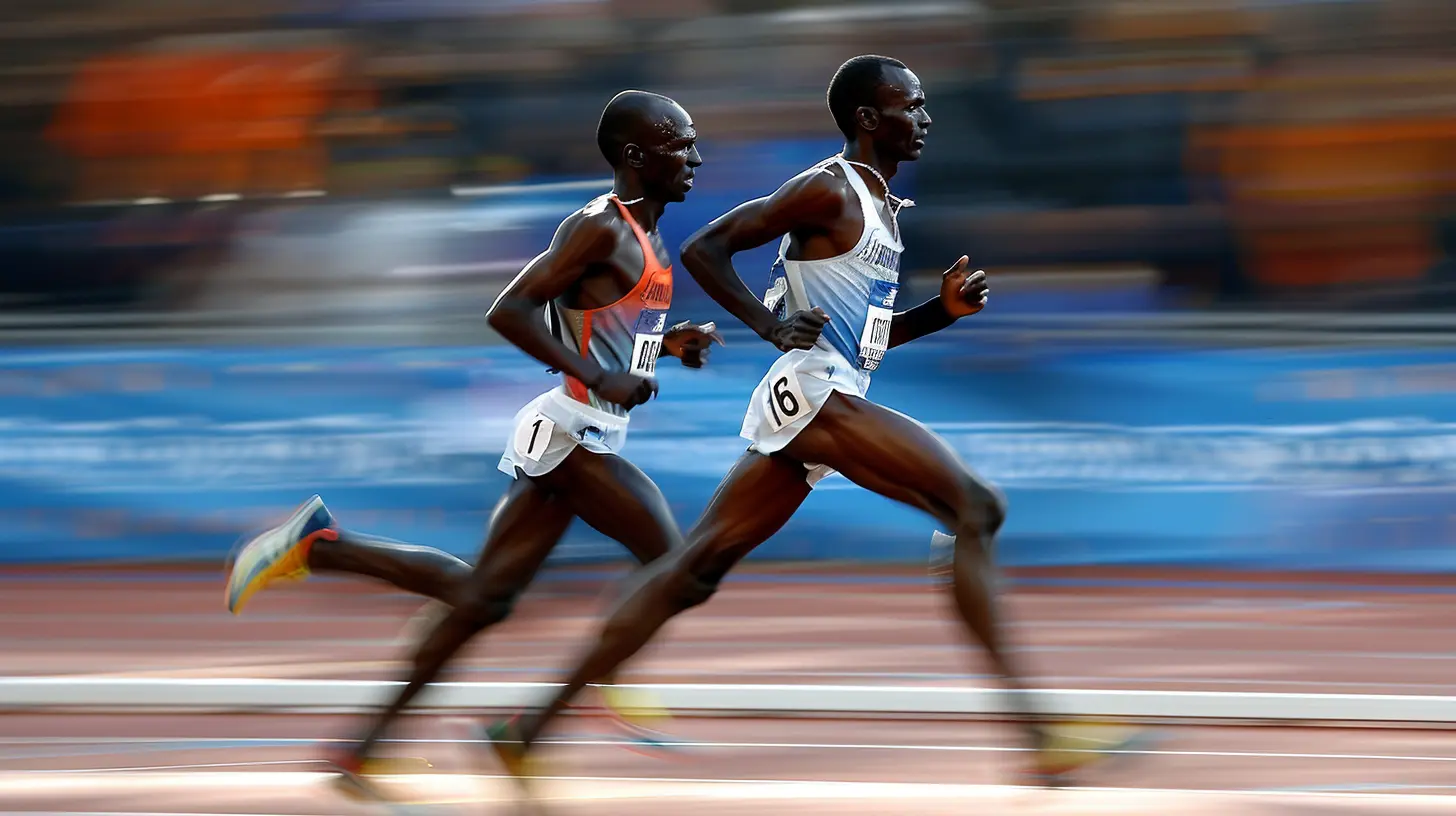
How to Analyze Your Running Stride
Time to get nerdy. You can’t fix what you don’t measure, right?1. Use Slow-Motion Video
Grab your phone, ask a friend, and film yourself running from the side and back. Your stride might feel awesome, but the footage doesn’t lie. Watch your posture, foot strike, cadence, and arm swing. Be brutally honest.2. Check Your Wear Pattern
Look at the bottom of your running shoes. Where is the tread worn out the most?- Outer heel wear = likely heel striker.
- Forefoot wear = forefoot striker.
- Uneven wear = possible imbalance in stride.
It’s like reading tea leaves, but for athletes.
3. Tech Tools Don’t Lie
Gadgets like the Garmin Running Dynamics Pod or Stryd footpods can track your cadence, ground contact time, vertical oscillation, and all kinds of juicy data. Use it. Understand it. Improve it.
Drills to Perfect Your Stride
Alright, time to get to work. You’ve got the info — now let’s activate it. These drills are your toolbox.1. High Knees
This drill fires up your hip flexors, improves foot placement, and boosts coordination. Keep it crisp and snappy.2. Butt Kicks
Great for hamstring engagement and reinforcing high cadence without overstriding.3. A-Skips and B-Skips
Elite runners swear by these. They help build strength, coordination, and stride rhythm. Do them before your runs to prime your system.4. Bounding
Helps increase stride power and proper push-off technique. Think of it as exaggerated running in slow motion — with purpose.5. Strides (a.k.a. Accelerations)
At the end of your easy runs, throw in 4–6 strides at around 80–90% effort for 20–30 seconds. Focus on form, not speed. It’s like speed polish for your engine.Strength Training: The Unsung Hero of Stride Perfection
Your running form is only as strong as the muscles behind it. If you’ve got weak glutes, quads, or core muscles — then yeah, your stride will suffer.Focus on functional strength exercises like:
- Deadlifts
- Lunges
- Bulgarian split squats
- Planks
- Hip thrusts
Stronger muscles = more control = more efficient stride. Simple math.
Common Stride Killers (And How to Fix Them)
Let’s call them out and crush them.❌ Overstriding
You’re reaching too far forward, heel-first, and slowing yourself down.✅ Fix: Increase cadence, shorten steps slightly, focus on landing midfoot under your hips.
❌ Slouching
Shoulders hunched, chest caved — this messes EVERYTHING up.✅ Fix: Pretend you’re being pulled forward by a string attached to your chest. Posture is power.
❌ Lazy Arms
Flailing or crossing your body like you’ve got invisible maracas.✅ Fix: Lock in those elbows and drive your arms like a pump.
❌ Bouncy Running (a.k.a. Vertical Oscillation)
You’re wasting energy going up and down instead of forward.✅ Fix: Keep your movement low and forward — like a panther stalking its prey. Smooth. Quiet. Deadly.
The Long-Term Payoff of a Perfected Stride
Perfecting your stride isn’t some one-week hack. It takes time, reps, and patience. But when you get it dialed in — oh man, it’s magic. You’ll run faster, feel smoother, recover better, and dodge injuries like Neo in The Matrix.Most importantly? You’ll enjoy running more. And that’s the real flex.
Final Thoughts: Make It Happen
You don’t need to be a biomechanics geek or an Olympic hopeful to perfect your stride. You just need to be intentional. Pay attention to the little things. Practice with purpose. And be consistent.Great runners aren’t born — they’re built. One step, one stride at a time.
Now lace up, fix that form, and go make the pavement your playground. You’ve got speed in your DNA. Let's unleash it.
all images in this post were generated using AI tools
Category:
AthleticsAuthor:

Uziel Franco
Discussion
rate this article
2 comments
Viviana Mathews
This article offers valuable insights into optimizing your running stride, yet it could benefit from more emphasis on individual biomechanics. Tailoring techniques to personal strengths and weaknesses may enhance both speed and overall efficiency significantly.
April 27, 2026 at 10:29 AM
Uziel Franco
Thanks for your feedback! I agree that individual biomechanics play a crucial role in optimizing stride. I'll consider adding more on that in future updates.
Solara Monroe
This article provides valuable insights into refining running technique for enhanced speed and efficiency. The tips offered are practical and accessible, making them suitable for runners of all levels. Emphasizing form and cadence is crucial, and following these guidelines can lead to noticeable improvements in performance.
March 28, 2026 at 1:34 PM
Uziel Franco
I'm glad you found the tips helpful! Focusing on form and cadence can make a big difference for any runner. Happy training!