Strategies for Pacing Yourself in Long-Distance Races
11 April 2026
Let’s talk about the unsung hero of every long-distance race: pacing. Yep, not those shiny new shoes, not that fancy electrolyte concoction you bought last week—pacing is what separates the finishers from the fizzlers.
Whether you're gunning for a half-marathon PB or just trying not to die somewhere around mile 18 of your marathon debut, mastering your pace is a big flippin’ deal. It’s the difference between finishing strong like a boss and crawling over the finish line like a dehydrated tumbleweed. So, buckle up (or lace up), because we’re about to deep-dive into the sassiest, realest strategies for pacing yourself in long-distance races.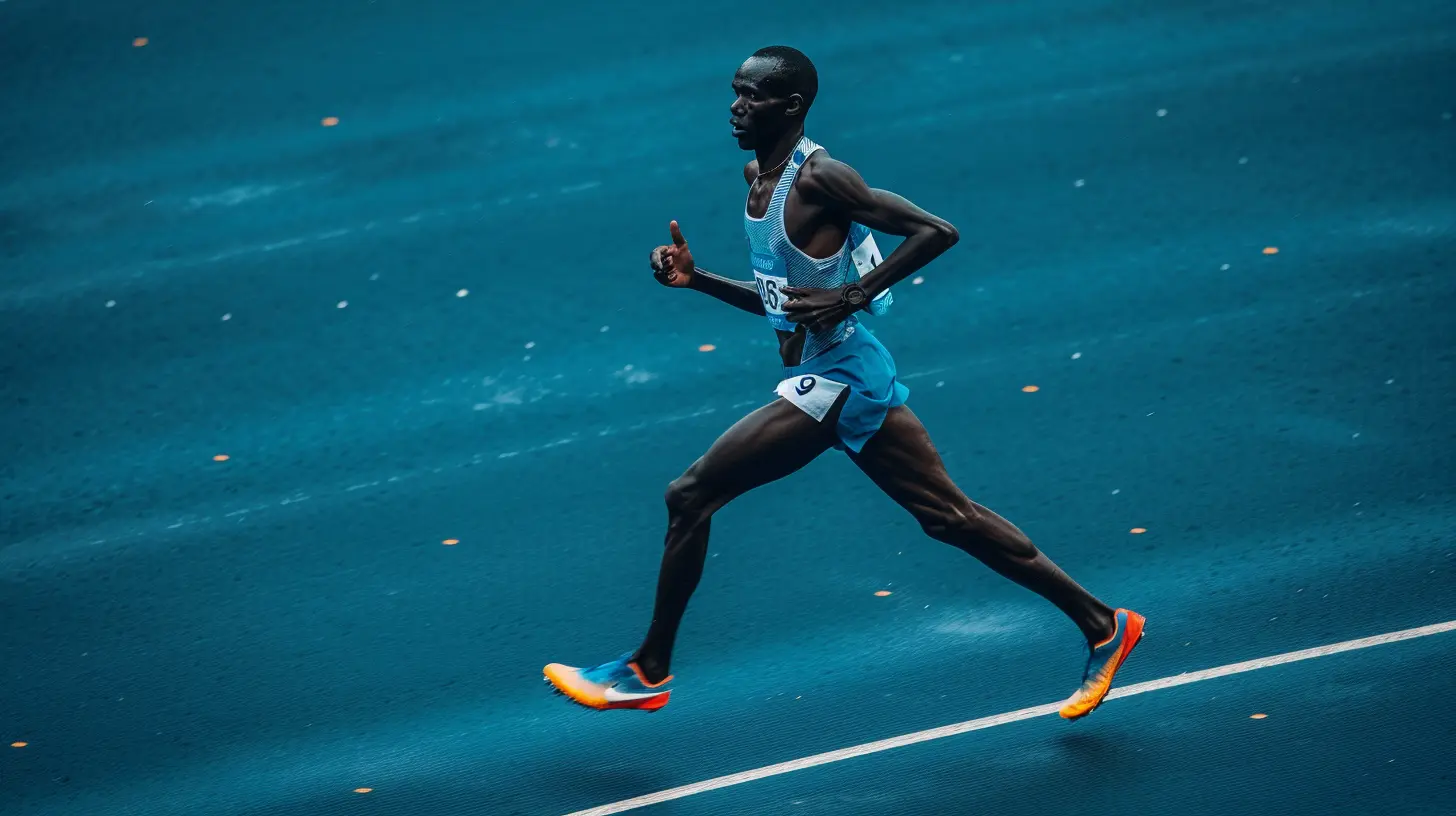
Why Pacing Matters More Than Your Fancy Gear
We get it. You dropped serious coin on that GPS watch that could probably launch a satellite. But no gear can save you if you burn out in the first few miles. Pacing isn’t just a running strategy—it’s survival mode, strategy, and finesse all rolled into one.Imagine it like dating: You don't propose after the first drink, right? Same deal with running. Don’t go busting out your race-day swagger in mile one. Long-distance races are all about the long game, baby.
The Golden Rule: Start Slower Than You Think You Should
This one hits hard because it's anti-ego. We know you’ve trained. You feel strong. The race day adrenaline is pumping. You want to race like you're trying to escape a zombie apocalypse. But slow down, turbo.Here’s the tea:
- Going out too fast feels good… for about 15-20 minutes.- After that? You’ll hit the dreaded wall, and it doesn't care if you’re wearing carbon-plated shoes.
- Your body burns through glycogen like a teenage boy going through snacks. Once that’s gone, say hello to struggle city.
Instead, start a bit slower than your goal pace during the first 2-3 miles. You’ll warm up properly, and your body will thank you later—like, when you effortlessly pass people gasping near the final miles.
Know Thy (Actual) Pace
Look, we love ambition. But if you’re planning to run a 7-minute mile pace for your first marathon just because your cousin’s boyfriend’s roommate did it—sit down. You NEED to know your realistic goal pace.Here’s how to find it:
- Use data from your training runs.- Calculate average pace from recent long runs.
- Use a race predictor calculator if you're into the numbers game.
If you can’t hold your goal pace for 10 miles in training, don’t expect magic to happen on race day. Unicorns don’t pace races, unfortunately.
Train With Purpose, Not Just Distance
There’s “just running a lot” and then there’s actually training smart. Guess which one helps you pace better?Add These to Your Training Mix:
- Tempo Runs: They hurt, but they prep your body to maintain a steady pace.- Long Runs With Negative Splits: Practice finishing faster than you start. Your legs will learn the art of control and strength.
- Progression Runs: Start slow and finish fast. Not only will this boost your pacing, but it also trains your brain to stay calm early and push when it counts.
Your race-day strategy should feel familiar, not like you’re trying to improvise with jazz hands at mile 14.
Don’t Obsess Over the Clock Every Second
Pacing isn’t about checking your watch every five seconds like you’re waiting on a breakup text. Chill. Yes, watches help, but you need to run by feel, too.Learn to Tune In:
- Pay attention to your breathing. Can you talk? Panting like a dog? Adjust.- Tune in to your stride. Is it smooth or starting to resemble a limp? Adjust.
- Feel your energy. Are you in control or just hanging on for dear life?
Running by feel mixed with occasional watch checks? That’s the sweet spot.
Break the Race Into Bite-Sized Chunks
Let’s face it—staring down 13.1 or 26.2 miles is mentally overwhelming. Time to play mental games.Use the Chunking Strategy:
- Divide the race into smaller segments—like 5Ks or aid station distances.- Treat each segment as its own mini race with its own pacing plan.
- Focus only on the segment you’re in. Don’t stress about what’s 8 miles away.
Chunking is like eating a cake. You don’t shove the whole thing in your mouth at once (unless you're emotionally unstable... no judgment). Bite by bite, people.
The Magic of Negative Splits
Negative splits = starting slower and finishing stronger. Sounds backward? Exactly why it works.When you start slow, you conserve energy, let your muscles warm up naturally, and reduce injury risk. Then, when everyone else is running on fumes later, boom—you kick it into another gear. It's like watching a rocket ship while others are stuck on cruise control.
Key Tips:
- Target the second half of the race to be slightly faster than the first.- Practice this pattern in training until it feels natural.
- Trust the process. Patience pays off.
Trust us. Blazing past runners in the final miles feels way better than crawling your way to the finish.
Taper Smart. Rest Like a Champ.
Let’s hit pause on all the Instagram “rise and grind” nonsense. The week or two before race day? It’s downtime, darling.The Power of the Taper:
- Reduces fatigue.- Let’s your body repair and rebuild.
- Restores glycogen stores.
You’re not getting fitter in race week. You’re either recovering smart or digging your own grave. So sleep in, skip that extra workout, foam roll like it’s your religion, and get ready to SLAY.
Fuel = Pace Insurance
You can’t drive a car on empty—and you sure as hell can’t run a long-distance race without fuel.Nutrition Musts:
- Pre-Race: Carbs are your BFF. Load up the 48 hours before.- During Race: Gels, chews, drinks—whatever works for you. Take something every 30-45 mins.
- Know your body. Practice fueling during training runs. Race day is NOT the time to experiment with new snacks (unless you like porta-potties).
Fuel up, or slow down. It’s that simple.
Bathroom Breaks and Other “Fun” Interruptions
Let’s get real for a sec: Things WILL go wrong. Maybe your shoelace comes undone. Maybe you need an unscheduled potty stop. Maybe your playlist dies and you’re stuck with the sounds of heavy breathing and squeaky sneakers.Don’t let small hiccups derail your pace. Adjust, refocus, and move on. In the grand scheme, a 30-second pit stop won’t wreck your race—but spiraling mentally? That will.
Mind Over Mileage
Honestly, pacing is as much mental as it is physical. You need to believe in your strategy, stay disciplined, and shut down the voice in your head that says, “Just sprint now and see what happens.”You wouldn’t binge-watch a Netflix series backwards, right? (Okay, maybe you would—but let’s not). Same with pacing: follow the order, trust the plot, wait for the big finale.
Post-Race Reflection Time
Once it's all said and done, take a hot minute to reflect. What worked? What didn’t? Did you go out too fast despite ALL THIS GREAT ADVICE? It’s okay. We forgive you.Pacing is a skill, not a one-off trick. Like any good skill, you’ll master it over time, with experience, sweat, and probably a few bad races under your belt.
Final Pep Talk
You’ve trained hard. You have the skills, you’ve got the knowledge—now trust your damn self. Pacing is how you show respect to the distance, to your training, and to your future self crushing that final mile like an absolute legend.So next time you're toeing the line, remember: Run smart. Run steady. Run strong. And maybe, just maybe, you’ll finish smiling instead of swearing never to race again.
all images in this post were generated using AI tools
Category:
AthleticsAuthor:

Uziel Franco
Discussion
rate this article
2 comments
Zinnia McCord
Great tips! Pacing really makes a difference during those long runs.
May 30, 2026 at 4:25 AM
Uziel Franco
Thanks for your feedback! Pacing truly is key for endurance. Happy running!
Preston Perez
Consider pacing yourself like a tortoise in a footrace against a caffeinated hare! Embrace the art of zen sprinting – channel your inner snail, and remember, slow and steady can outlast the speedy snacks!" 🐢🏃♂️🍪
April 14, 2026 at 10:34 AM
Uziel Franco
Absolutely! Embracing a steady pace can lead to endurance and success, proving that consistent effort often triumphs over speed. 🐢✨

![The Secret to [Player Name]s Success: A Profile on Hard Work and Talent](/pictures/blog/small/the-secret-to-player-names-success-a-profile-on-hard-work-and-talent_2.webp)
![From Rookie to Superstar: [Player Name]s Impact on the League](/pictures/blog/small/from-rookie-to-superstar-player-names-impact-on-the-league_2.webp)