The Science of Speed: What Makes Downhill Skiing So Extreme?
13 December 2025
Imagine standing at the top of a snow-covered mountain, a biting wind whipping past your face, and the only thing between you and the bottom is your skill, guts, and a pair of razor-sharp skis. Welcome to the high-octane world of downhill skiing — one of the fastest, most intense sports on Earth.
What is it that makes this winter sport such a beast? Why does it take a unique blend of science, athleticism, and bravery to master it? In this article, we're powering down the slopes to break down the science behind the speed, the physics, and the extreme thrill that fuels downhill skiing.
What Is Downhill Skiing All About?
At its core, downhill skiing — also called alpine skiing — is exactly what it sounds like: skiing down a mountain as fast as humanly possible. Unlike slalom or giant slalom, which involve tight turns around gates, downhill skiing is about high-speed racing on relatively straight tracks with long, sweeping curves and jaw-dropping jumps.We're talking speeds that can exceed 85 mph (that’s faster than your car on most highways). One misstep, and you're eating snow at warp speed. That’s not just extreme – it’s next-level adrenaline.
Gravity: The Ultimate Engine of Speed
Let’s start with the basics. What makes skiers go so fast on these crazy slopes? Well, the main force at play here is gravity — the ultimate natural engine.When a skier pushes off at the starting gate, they’re essentially surrendering to gravity. The steeper the slope, the stronger the pull. But it's not as simple as rolling a snowball downhill. Skiers tuck their bodies, aim for aerodynamic shapes, and strategically use their equipment to reduce drag and crank up acceleration.
The steeper the course, the faster the drop. Replace the slope with a vertical wall, and you’re nearly skydiving. Okay, maybe not quite — but you get the idea.
Aerodynamics: Fighting Wind at 80+ MPH
Ever see a downhill skier crouched low, looking like a human rocket? That’s no accident. Their form is all about minimizing air resistance.Let’s break it down:
- Tuck Position: By bending their knees and tucking their arms close, skiers reduce the surface area exposed to the wind.
- Helmet and Suit Design: Specialized race suits are smooth, tight, and often made from materials that cut through air like a hot knife through butter. Helmets and goggles are shaped to further reduce drag.
- Pole Positioning: Racers even angle their ski poles behind them during the run. Why? Less wind resistance.
Think of it like riding a bike downhill. Sit upright and the wind punches you in the chest. Lean forward and you slice through the air. That's aerodynamics in action.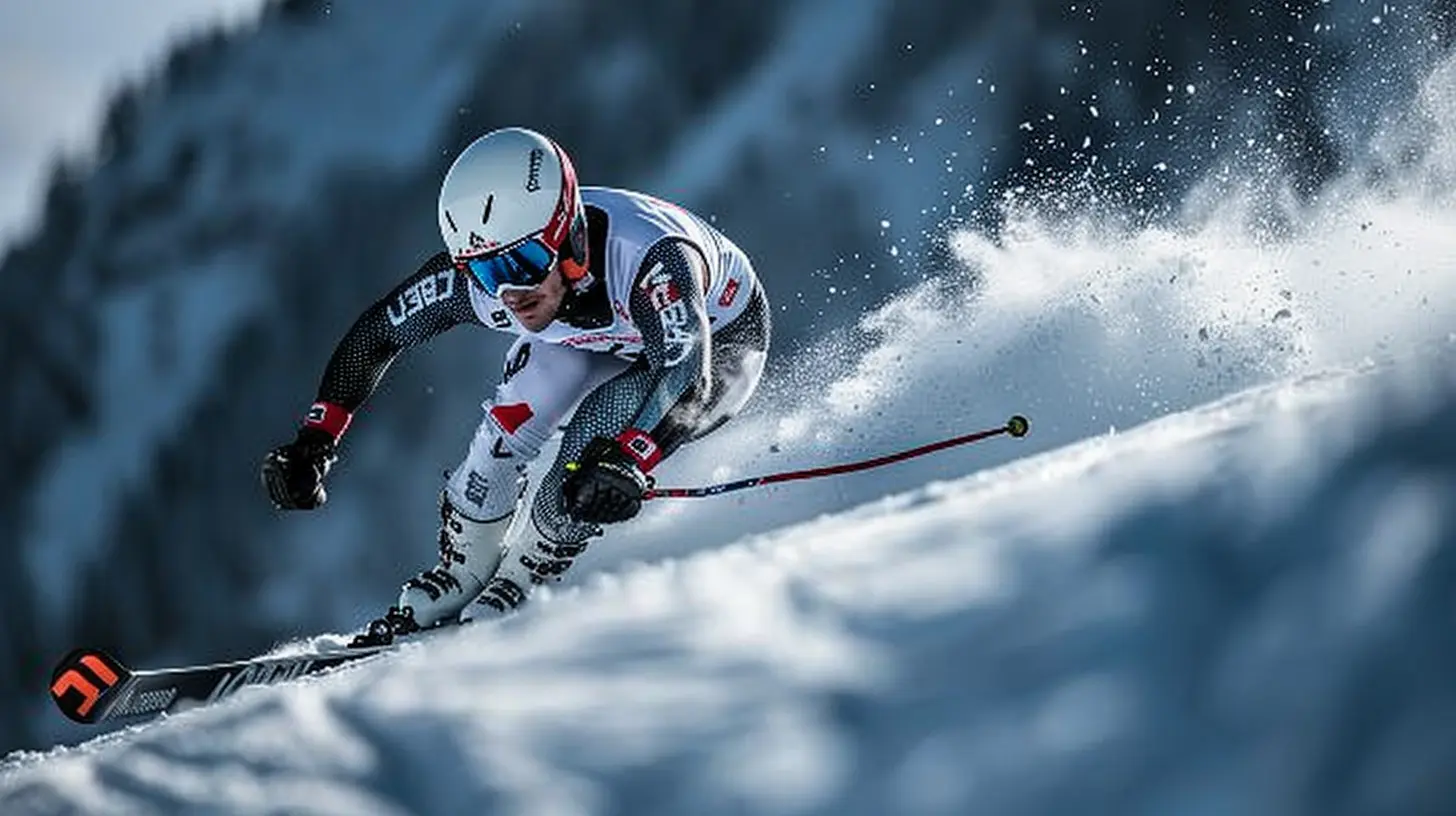
The Role of Friction: It’s All About the Skis
If aerodynamics is the battle with air, then friction is the battle with the snow. Surprisingly, a little bit of friction is good. Too much? Your speed gets dragged down like an anchor. Too little? You’re basically skiing on ice with no control.Ski Tech: More Than Just Planks
Modern downhill skis are marvels of engineering. They're long, stiff, and often made with materials like carbon fiber, titanium, and high-density plastics. Why?- Length = Stability: Longer skis offer more stability at higher speeds.
- Stiffness = Precision: Stiff skis help absorb bumps and maintain control around high-speed turns.
- Edges = Grip: The metal edges cut into the snow, providing crucial control on icy patches.
Wax On, Speed Up
Another science-y element? Ski wax. Racers wax their skis to reduce friction even further. Different waxes are used based on temperature, humidity, and snow type. It’s like tuning a race car’s tires for performance — get it right, and you fly. Get it wrong, and you’re dragging.The Human Element: Grit, Training, and Pure Nerve
Now, let’s talk about the real engine behind the skis — the skier. These athletes train like warriors. It takes insane leg strength, core stability, and unreal reflexes to manage the G-forces and stay upright on runs that would make mere mortals cry.Physical Demands
If you think this is just about standing on skis, think again:- Legs: They've got to absorb shocks from bumps, jumps, and sharp turns.
- Core: A strong core keeps them stable while shifting weight at high speeds.
- Balance: One tiny misalignment and the skier could be airborne — in the worst way.
Mental Game
Downhill skiing isn’t just physical — it’s deeply psychological. You’re essentially signing a waiver with physics every time you leave the gate. Confidence, focus, and the ability to manage fear — that’s what separates podium finishers from crash reels.Course Design: A Rollercoaster of Snow
Downhill courses themselves are feats of design. They’re not just straight slides from top to bottom.Course setters add:
- Turns: Sweeping curves that challenge control and line.
- Jumps: Which can launch skiers dozens of feet into the air.
- Rollers and Drops: Natural or man-made snow shapes that add technical difficulty.
All this is packed into a vertical drop that usually exceeds 800 meters (that’s nearly half a mile going straight down). Each course is carefully calibrated to test speed, skill, and nerves.
G-Forces: The Invisible Force That Slaps You Around
You’ve heard race car drivers talk about G-forces. Skiers feel them too. When carving down a slope at 80 mph, the centrifugal force in turns can press over 3 times the skier’s body weight into their legs.It’s like doing squats…while flying downhill…with a timer ticking…in sub-zero temps. No big deal, right?
Crashes in Downhill Skiing: When Science Goes Sideways
Let’s be real — as thrilling as downhill skiing is, it’s also ridiculously dangerous. High-speed wipeouts are part of the game, and crashes can be brutal. Thanks to the force of impact and the speed involved, even minor errors can lead to serious injuries.Safety Gear Saves Lives
Luckily, modern ski racing is safer than ever, thanks to:- Back protectors
- Padded suits
- Better helmets
- Netting and fencing along courses
Still, it’s a sobering reminder that these athletes are putting their bodies (and often their lives) on the line every time they compete.
The Evolution of Downhill Skiing: Faster Every Decade
Downhill skiing hasn’t always been this fast. Just 50 years ago, top racers were hitting 50 mph. Now, with better equipment, training, and course designs, that number has jumped dramatically.Tech’s Role in Speed
From precision-tuned skis to aerodynamic gear to real-time weather tracking, technology is allowing racers to push the limits of what’s humanly possible.Even the timing systems have evolved. Photo cells, GPS tracking, and ultra-precise clocks now measure races down to hundredths of a second. In a downhill race, a blink can separate victory from defeat.
Why We’re Obsessed with The Speed
So, what makes downhill skiing so extreme? It's the intoxicating mix of physicality, danger, raw speed, and beauty. There’s a poetry in the chaos — a blur of motion against a white canvas.And for viewers? It’s edge-of-your-seat action. For racers? It’s a love affair with the fall line — that straightest, fastest, most dangerous path down the mountain.
It’s not just sport. It’s science, motion, and madness rolled into one icy thrill ride.
Final Thoughts: Respect the Mountain, Embrace the Speed
Downhill skiing is more than just sliding on snow. It's a carefully choreographed dance between man and mountain, where physics meets bravery and milliseconds define greatness.Every turn is calculated. Every tuck is deliberate. And every second counts.
Whether you’re a fan, a weekend warrior, or just someone who appreciates the thrill of elite-level sport, understanding the science behind the speed only deepens the admiration for these incredible athletes and the extreme world they dominate.
So next time you watch a downhill race, know this — you’re not just seeing a competition. You’re witnessing physics, engineering, and human will working in perfect harmony at blistering speed.
all images in this post were generated using AI tools
Category:
Extreme SportsAuthor:

Uziel Franco
Discussion
rate this article
2 comments
Graham Estes
Great article! I appreciate how you broke down the physics behind downhill skiing. It’s fascinating to see how speed, technique, and environmental factors come together to create such an extreme sport. Looking forward to more insights on the science behind other sports!
January 20, 2026 at 4:39 AM
Uziel Franco
Thank you for your kind words! I'm glad you found the physics of downhill skiing intriguing. Stay tuned for more insights on the science behind other sports!
Gabriel Martinez
Downhill skiing: where gravity meets adrenaline, and the only thing faster than the skiers is the heart rate of those watching from the sidelines!
December 18, 2025 at 4:42 AM
Uziel Franco
Absolutely! Downhill skiing brilliantly combines the thrill of gravity with the rush of adrenaline, creating an exhilarating experience for both skiers and spectators alike.