How to Race in the Rain: Tips for Wet and Windy Triathlon Conditions
21 February 2026
Triathlons are already tough. Now, throw in some rain, wind, and the general feeling that Mother Nature has a personal vendetta against you, and you've got an extra level of chaos. Racing in wet conditions isn’t just about getting soaked—it changes everything from your grip on the bike to your confidence in the run. But don’t worry—I’ve got your back.
If you're gearing up for a rainy triathlon, this guide will help you navigate the puddles, dodge the wind gusts, and still cross the finish line like the absolute warrior you are. 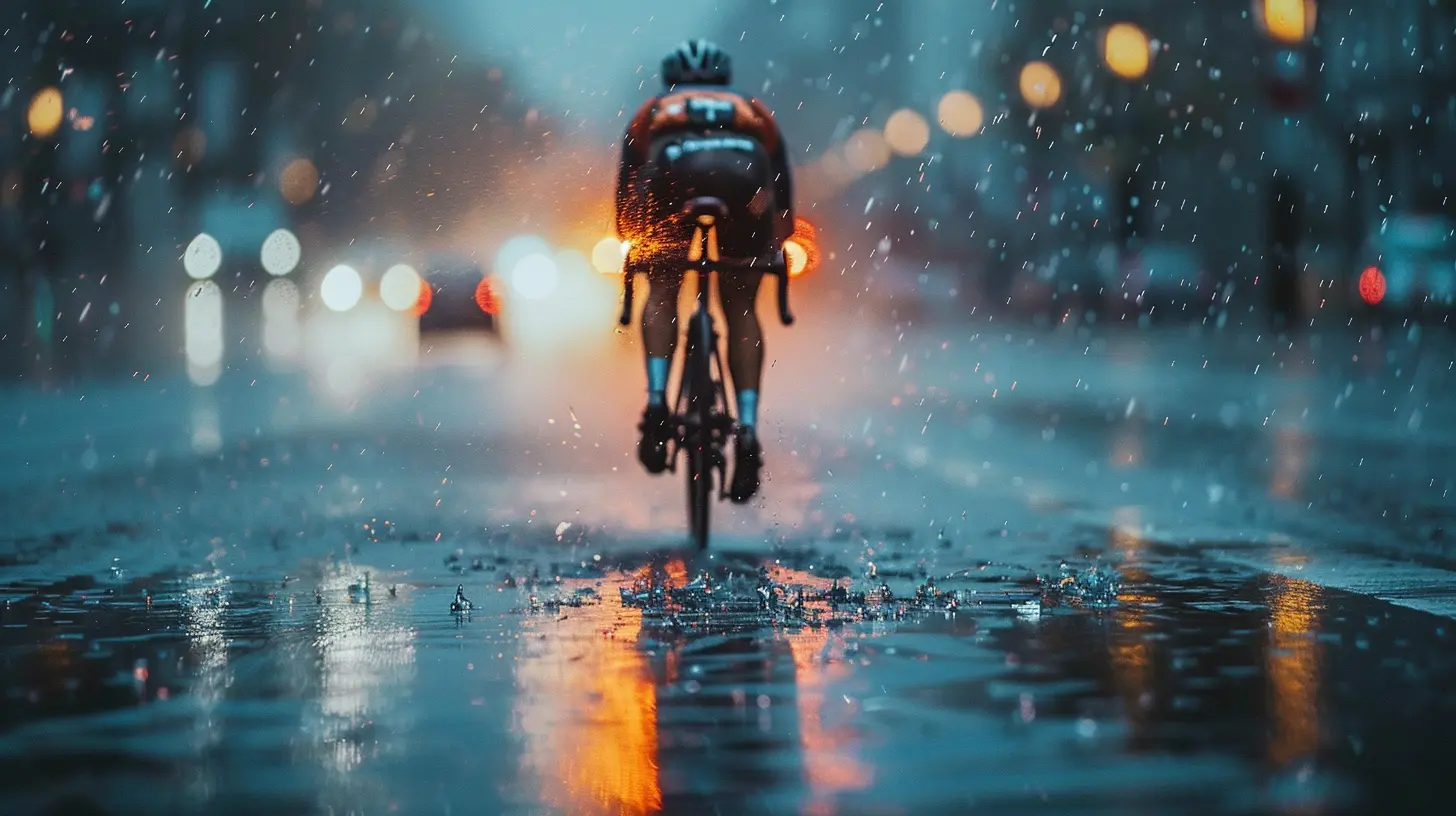
The Mental Game: Embrace the Soggy Struggle
Before we even get into the nitty-gritty tips, let's talk mindset. Rainy race conditions can mess with your head if you let them. Do you expect a dry, comfortable race where everything goes exactly as planned? Ha! Good one.Accept right now that you're going to be wet, cold, and maybe a little miserable. But guess what? So is everyone else! The difference between a strong finisher and someone who mentally checks out is all about attitude. If you embrace the elements instead of fighting them, you're ahead of half the pack already. 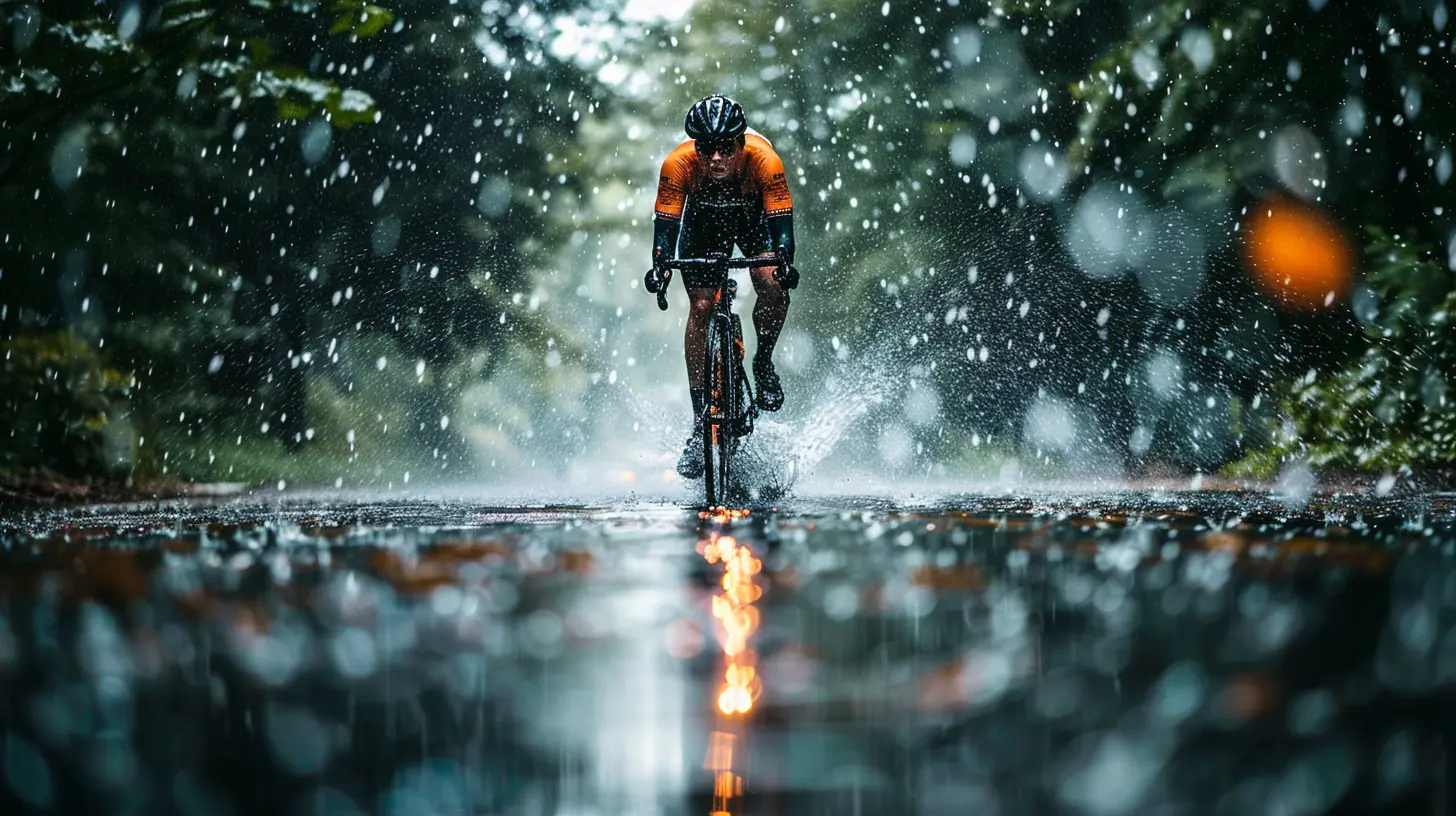
Pre-Race Prep: What to Wear So You Don’t Freeze
1. Layer Up (But Not Too Much)
You might be tempted to throw on extra layers to stay warm, but remember—once you're wet, more clothes just mean more soggy fabric weighing you down. Instead, wear moisture-wicking gear that won’t hold water like a sponge. A lightweight rain-resistant jacket can also help, but don’t go full-on winter mode.2. Anti-Chafing is Your New Best Friend
Let’s be honest—chafing is already a menace in regular triathlons. Add rain, and it’s like sandpaper on steroids. Lube up generously with anti-chafing balm in all the usual spots (we're talking underarms, thighs, neck, and any other areas that have ever betrayed you).3. A Clear Lens is a Game Changer
If you wear sunglasses, swap out your dark-tinted lenses for clear or lightly tinted ones. Visibility is already tough in the rain, and you don’t want to feel like you're racing blind through a storm.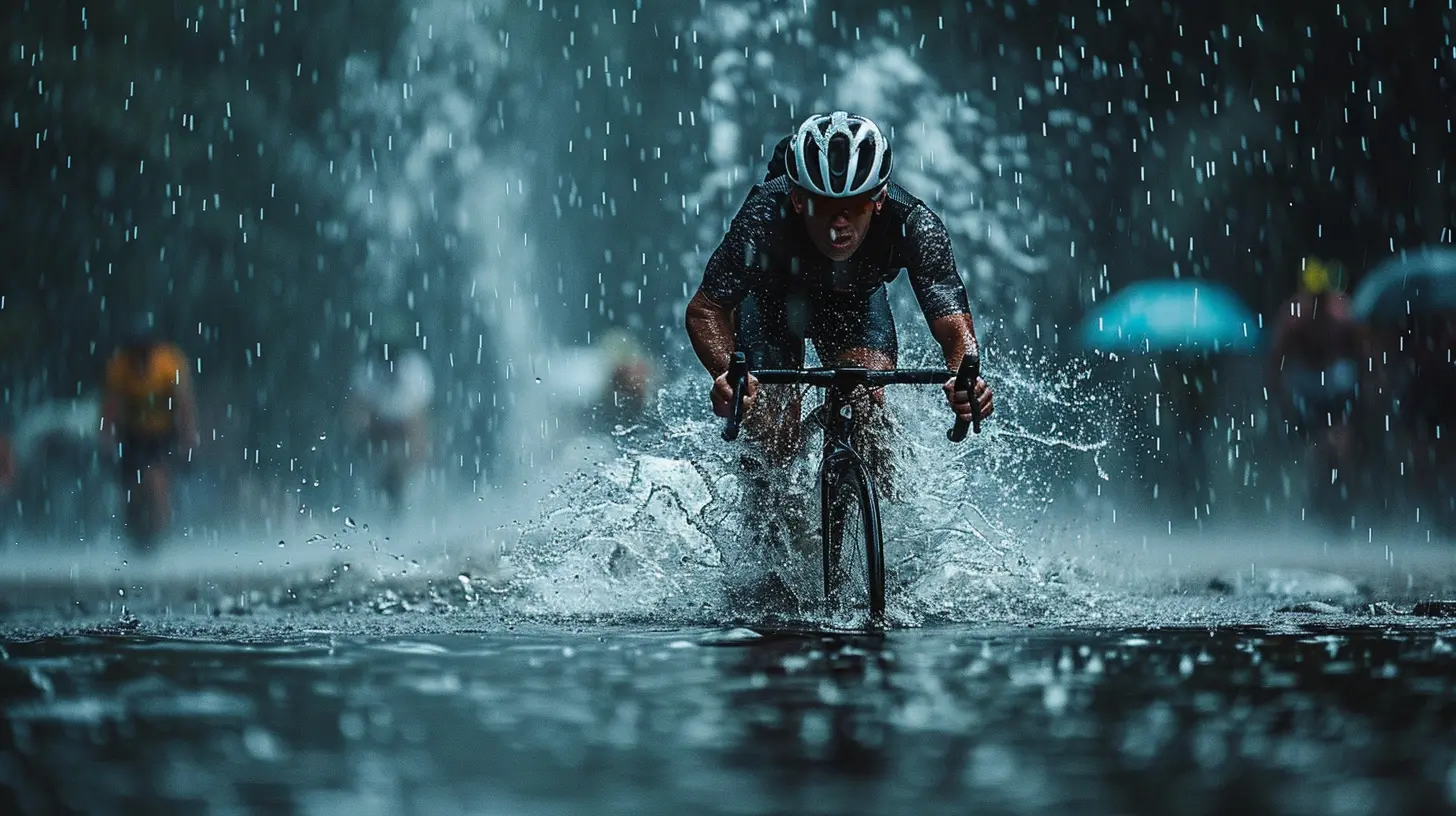
The Swim: When Rain Meets Water (Twice)
You’d think the swim portion wouldn’t be affected by rain—after all, you’re already in water. Wrong. Rain can churn up the surface, making for choppier conditions.4. Sight More Often
Raindrops distort the water's surface, and if you're swimming in an open body of water, spotting buoys becomes trickier. Lift your head and sight more frequently so you don’t accidentally add an extra 100 meters to your swim (because no one wants that).5. Breathe on Both Sides
Crosswinds can turn those smooth strokes into lungfuls of water real quick. If you’re used to breathing on one side, practice bilateral breathing so you can switch if necessary.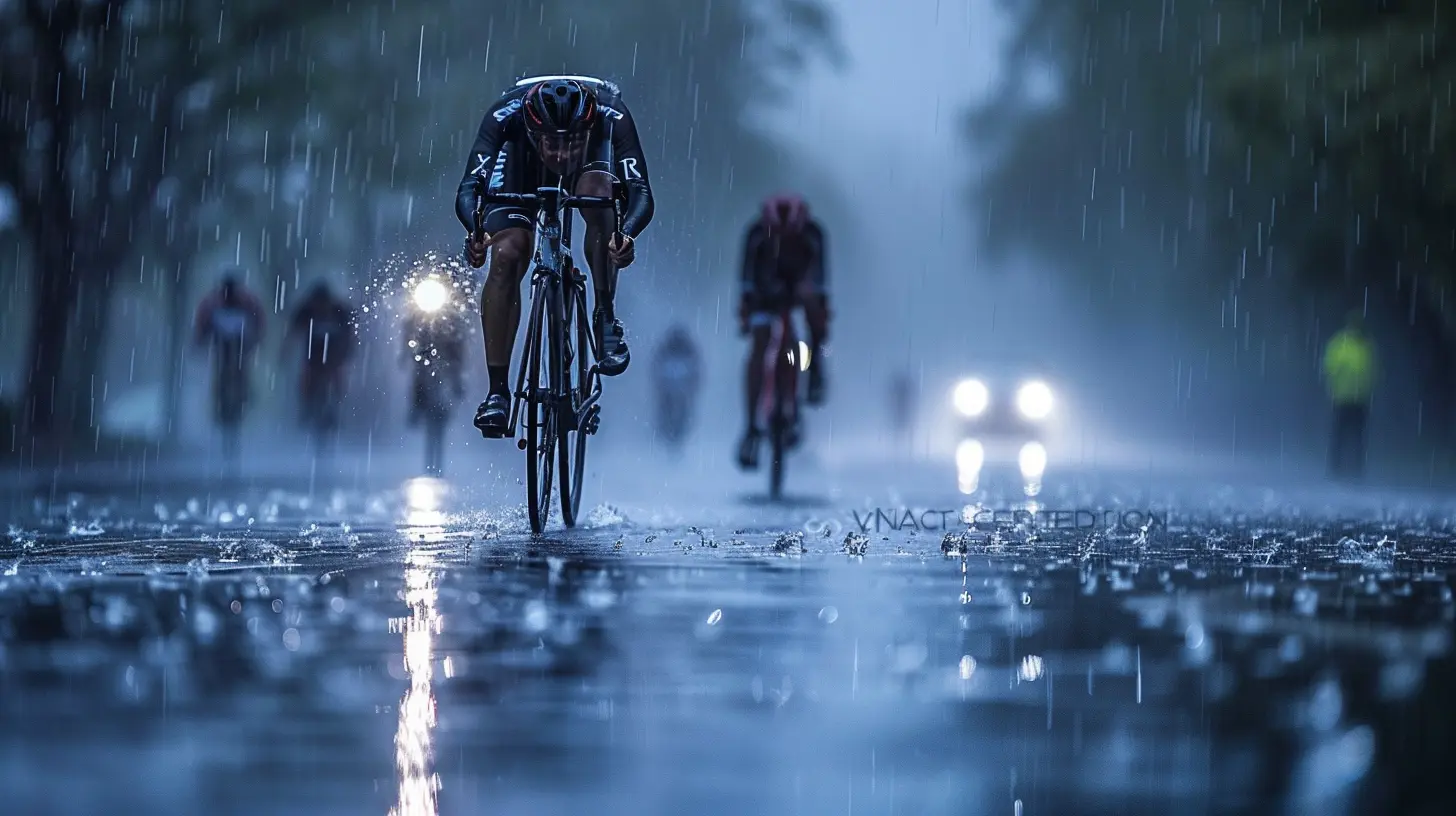
The Bike: Slick Roads and Nerve-Wracking Turns
If there's one part of the triathlon that gets sketchy in the rain, it's the bike segment. Wet roads mean less traction, and rain on your visor or sunglasses makes visibility... let's just say "interesting."6. Lower Your Tire Pressure
Not drastically, but reducing your tire pressure slightly (about 5-10 psi lower than normal) helps improve traction. Imagine it like sneakers with extra grip versus icy high heels—yeah, big difference.7. Take Turns Like Your Grandma Would
Fast, sharp turns on wet roads are a recipe for disaster. Brake before the turn, not during, and lean less aggressively. This is not the time to test your inner Tour de France speed demon.8. Avoid the Rainbow Puddles
Those colorful puddles on the road? That’s oil mixed with rainwater, and it’s slipperier than a banana peel in a cartoon. Steer clear unless you enjoy impromptu skids.9. Cover Your Brakes Early
Wet brakes take longer to engage. Start braking earlier than usual and apply steady pressure instead of slamming them last minute.The Run: Wet Shoes and Wind Slaps
Your legs are already jelly from the bike, and now it’s time to run in soggy shoes and face the wind like a champ.10. Quick-Dry Socks for the Win
Standard cotton socks will betray you in wet conditions. Opt for quick-dry, moisture-wicking socks to help minimize the swamp-foot situation.11. Pick Your Footing Wisely
Pavement gets slick, and puddles have a way of being deeper than you think. Stick to the middle of the road where water drains better and avoid paint lines—they turn into slip-and-slide zones.12. Embrace the Wind (Even When It Feels Personal)
Headwinds can be soul-crushing, but use them strategically. Lean slightly forward, shorten your stride, and keep your arms closer to your body to reduce wind resistance. When the wind is at your back? Enjoy that free speed boost!Post-Race: Warm Up & Dry Off ASAP
13. Have Dry Clothes Ready
Don’t be that person shivering in their wet race gear while trying to rehydrate. Pack a dry set of clothes and a towel in your transition or post-race bag. Your future self will thank you.14. Hydrate (Yes, Even Though It Was Raining)
Just because you spent the whole race soaked doesn’t mean you didn’t sweat. Replenish fluids like you normally would—it’s easy to underestimate how much you actually lost.Final Thoughts: Rainy Races Make You Tougher
Racing in the rain isn’t ideal, but it's a test of grit. These conditions separate those who secretly hope for a last-minute race cancellation from those who adapt and push through. And honestly? Completing a triathlon in gnarly weather makes you feel like an absolute legend.So suit up, embrace the rain, and show that storm who’s boss. You’ve got this.
all images in this post were generated using AI tools
Category:
TriathlonAuthor:

Uziel Franco
Discussion
rate this article
2 comments
Georgina Duke
Great tips! Remember to practice transitions in wet conditions for smoother race execution.
March 23, 2026 at 5:46 AM
Uziel Franco
Thank you! Practicing transitions in wet conditions is essential for a seamless race. Great reminder!
Isla Lozano
Embrace the elements! Racing in the rain can enhance your performance and resilience. Mastering wet conditions boosts your skills and confidence—don’t shy away; instead, conquer the challenge and race to win!
February 23, 2026 at 3:34 AM
Uziel Franco
Absolutely! Embracing challenging conditions not only sharpens skills but also builds confidence. It's all about mastering the elements to enhance your performance. Let’s conquer the rain!